
Have you ever developed an itchy rash and wondered what caused it? Maybe a new soap seemed responsible, or perhaps a certain food, cosmetic, fabric, or household product appeared to trigger your symptoms. The frustrating part is that skin reactions don’t always happen immediately, making the real culprit difficult to identify.
An occasional itch may not seem concerning. But when redness, swelling, irritation, or recurring rashes continue without an obvious explanation, guessing the cause can become frustrating.
A skin allergy test can provide useful information by helping identify substances that may be triggering an allergic response. Instead of avoiding dozens of products unnecessarily, testing can help narrow down potential allergens and give you a better understanding of your skin.
Your Skin May Be Reacting to More Than You Think
The skin comes into contact with countless substances every day. Think about everything that touches your skin:
- Soaps and body washes
- Shampoos and conditioners
- Cosmetics
- Laundry detergents
- Fragrances
- Jewelry and metals
- Cleaning products
- Fabrics
- Plants
- Adhesives
- Topical medications
Any of these substances may cause irritation or, in some people, an allergic reaction.
The challenge is that two people can use the same product without experiencing the same response. Allergies are influenced by an individual’s immune system, previous exposure, genetics, and other factors.
That’s why identifying the specific trigger can be more useful than simply treating the visible rash.
Allergy or Irritation? They Aren’t the Same Thing
One reason skin reactions can be confusing is that an allergy isn’t always responsible.
1. Irritant Reaction
An irritant reaction occurs when something directly damages or irritates the skin. Strong chemicals, frequent handwashing, or harsh cleaning products can cause this type of response.
2. Allergic Reaction
An allergic reaction involves the immune system responding to a substance that it considers harmful, even though that substance may be harmless to most people.
Both reactions can cause similar symptoms, including:
- Redness
- Itching
- Dryness
- Burning
- Swelling
- Rash
- Blistering
Because the symptoms can overlap, identifying the underlying cause may require a professional evaluation.
When an Itch Becomes a Pattern
A single episode of itchy skin may resolve on its own. But recurring symptoms tell a different story.
Pay attention if your skin repeatedly becomes irritated:
- After using a particular cosmetic
- Following exposure to cleaning products
- When wearing certain jewelry
- After applying specific creams
- At work but not at home
- During particular activities
- After contact with certain plants or materials
Patterns like these can provide important clues. Keeping a simple record of what you used, touched, ate, or were exposed to before symptoms appeared may help your healthcare provider understand what could be contributing to the reaction.
Common Signs That May Lead to Allergy Testing
Skin allergies can look different depending on the trigger and the individual. Some common signs include:
1. Persistent Itching
Itching is one of the most noticeable symptoms of many allergic skin reactions. It may range from mild irritation to an intense urge to scratch.
2. Red or Inflamed Skin
Affected areas may appear red, warm, swollen, or irritated.
3. Rash
An allergic rash may appear as patches, bumps, hives, or other changes in the skin.
4. Dry or Cracked Skin
Repeated inflammation can weaken the skin barrier and contribute to dryness or cracking.
5. Swelling
Some allergic reactions can cause localized swelling around the area exposed to an allergen. Symptoms that repeatedly return or fail to improve may warrant professional evaluation.
Why Finding the Trigger Matters
Treating a rash without understanding what caused it may provide only temporary relief. Imagine using a product every day that repeatedly triggers your skin, then treating the irritation without identifying the source. The symptoms may continue to return. Identifying an allergen can make management more targeted.
Once a potential trigger is known, your healthcare provider can discuss strategies for reducing exposure and managing future reactions. This is one of the reasons skin allergy testing can be valuable for people dealing with recurring or unexplained skin symptoms.
What Can Trigger a Skin Allergy?
There isn’t one universal list of allergens that affects everyone. Common potential triggers include:
- Nickel and other metals
- Fragrances
- Preservatives
- Cosmetics
- Hair products
- Adhesives
- Latex
- Certain topical medications
- Plants
- Household chemicals
Some people may also experience skin symptoms as part of broader allergic conditions.
The important point is that identifying a trigger requires looking at the individual’s symptoms, history, and pattern of exposure rather than assuming one particular substance is responsible.
Why Guessing Isn’t Always the Best Strategy
When an unexplained rash appears, it’s tempting to eliminate multiple products at once. You might stop using a moisturizer, switch your detergent, change your shampoo, avoid certain foods, and stop wearing jewelry all at the same time.
While this may sometimes reduce exposure, it can make it difficult to determine which change actually helped. A structured allergy evaluation can provide a more focused approach.
Instead of constantly wondering “What caused this?”testing may help provide clearer information about which allergens are relevant to your symptoms.
What Happens During Skin Allergy Testing?
The specific testing method depends on the type of allergy your healthcare provider suspects.
Your evaluation may begin with a detailed discussion about:
- Your symptoms
- When they started
- Where the reaction appears
- How long symptoms last
- Products you regularly use
- Occupational exposures
- Previous allergic reactions
- Medications
- Family and personal allergy history
This information helps determine which testing approach may be appropriate.
Patch Testing and Contact Allergies
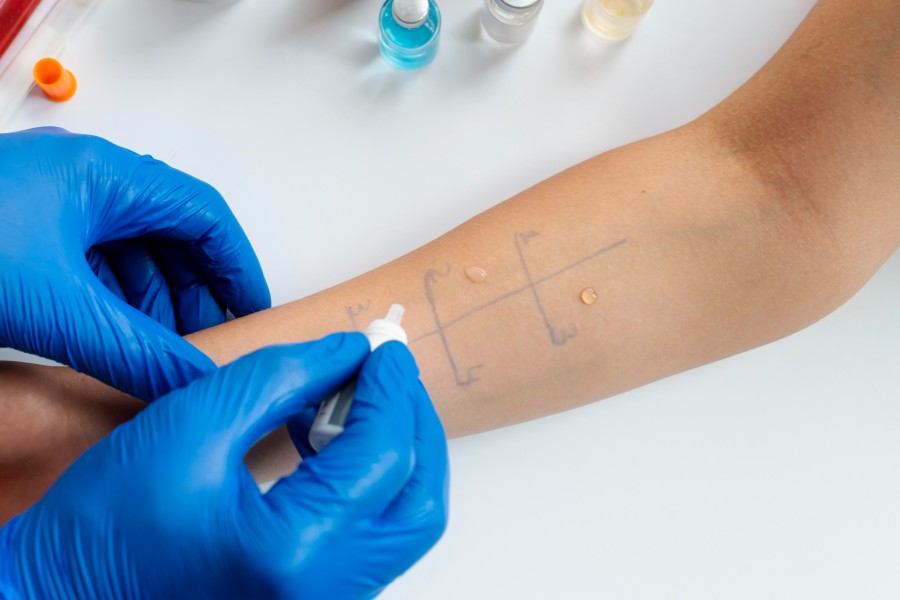
Patch testing is commonly used when a healthcare provider suspects contact dermatitis caused by an allergic reaction to a substance that touches the skin. Small amounts of suspected allergens are placed on the skin using specialized patches.
The skin is then observed for reactions over a specified period. Patch testing can be particularly useful when symptoms repeatedly occur after exposure to products such as cosmetics, fragrances, metals, adhesives, or other substances. The goal isn’t simply to confirm that your skin is sensitive. It is to identify specific substances that may be responsible for the reaction.
What Your Results Can Tell You
A positive allergy test can provide useful information, but results should always be interpreted alongside your symptoms and medical history. A test result doesn’t automatically mean that every exposure to a particular substance will cause a reaction.
Your healthcare provider can help determine whether the identified allergen matches your real-world symptoms and exposure pattern. This is important because effective allergy management isn’t simply about collecting a list of substances to avoid. It’s about understanding which findings are actually relevant to your health.
What Happens After a Skin Allergy Test?
Getting the results is only one part of the process. The next step is understanding what those results mean for your everyday life.
If testing identifies a likely allergen, your healthcare provider may recommend practical ways to reduce or avoid exposure. This could involve changing personal-care products, choosing alternative materials, adjusting workplace precautions, or reviewing ingredients in products you regularly use.
The goal is not to make you afraid of everything that touches your skin. Instead, it is to help you make informed decisions based on your specific allergy triggers.
Turning Allergy Results Into Everyday Changes
Once a trigger has been identified, avoiding it can sometimes be easier than expected. For example, someone with a sensitivity to a particular fragrance may be able to switch to fragrance-free products. Someone with a metal allergy may need to pay closer attention to jewelry, clothing fasteners, or other items that contain the offending material.
Helpful habits may include:
- Reading product ingredient labels
- Choosing products designed for sensitive skin
- Checking cosmetic ingredients
- Wearing protective gloves when appropriate
- Avoiding known allergens
- Informing healthcare providers about confirmed allergies
- Keeping a record of previous allergic reactions
Small changes can make a significant difference when they target the actual source of the problem.
What If Your Test Doesn’t Find an Allergy?
A negative result doesn’t mean your symptoms aren’t real. Skin irritation can have many causes that aren’t related to an allergic immune response.
Possible explanations may include:
- Irritant contact dermatitis
- Eczema
- Dry skin
- Infections
- Environmental factors
- Certain medications
- Other dermatological conditions
If your symptoms continue despite negative allergy testing, your healthcare provider may recommend additional evaluation to determine what else could be contributing to the problem.
This is why testing should be viewed as one part of a broader evaluation rather than a standalone answer to every skin concern.
Children Can Experience Skin Allergies Too
Skin reactions aren’t limited to adults. Children may develop irritation or allergic reactions from:
- Soaps and shampoos
- Laundry products
- Fragrances
- Metals
- Adhesives
- Plants
- Personal-care products
Because children may have difficulty explaining exactly what they were exposed to, parents and caregivers can help by observing when symptoms appear and what products or activities occurred beforehand.
If a child’s rash is persistent, recurring, painful, or accompanied by other concerning symptoms, professional evaluation can help determine the appropriate next steps.
Skin Allergy Testing and Your Daily Routine
One of the biggest advantages of identifying an allergy trigger is having a clearer understanding of how to manage it in everyday situations. Instead of completely changing your lifestyle, you may only need to make targeted adjustments.
For instance, you might:
- Replace one personal-care product
- Choose a different type of jewelry
- Avoid a specific ingredient
- Use protective equipment at work
- Select hypoallergenic alternatives when appropriate
The more you understand your individual triggers, the easier it can become to make practical decisions without unnecessarily restricting your routine.
When Should You Consider an Allergy Evaluation?
Consider speaking with a healthcare professional if you experience recurring or unexplained skin reactions, particularly when symptoms:
- Keep returning
- Last for an extended period
- Become increasingly uncomfortable
- Appear after using specific products
- Interfere with sleep or daily activities
- Occur repeatedly at work
- Do not improve with basic skin-care changes
A professional evaluation can help determine whether skin allergy testing may be appropriate for your situation.
Don’t Ignore Severe Allergic Reactions
Most skin reactions are localized and manageable, but some allergic reactions can become serious. Seek emergency medical attention if a reaction involves symptoms such as:
- Difficulty breathing
- Swelling of the lips, tongue, or throat
- Severe dizziness
- Fainting
- Rapidly worsening symptoms
These symptoms may indicate a serious systemic allergic reaction and require immediate medical attention.
Frequently Asked Questions (FAQs)
1. What is a skin allergy test?
A skin allergy test is an evaluation used to help identify substances that may trigger an allergic reaction. The specific testing method depends on the suspected allergy and may include approaches such as patch testing for certain contact allergies.
2. What is the difference between a skin allergy test and skin allergy testing?
The terms are often used interchangeably. A skin allergy test may refer to an individual test, while skin allergy testing can describe the broader evaluation process used to identify potential allergens.
3. What can cause an allergic skin reaction?
Common triggers include fragrances, cosmetics, metals such as nickel, preservatives, adhesives, latex, plants, and certain topical medications. The specific trigger varies from person to person.
4. Does a positive allergy test mean I have to avoid the allergen forever?
Not necessarily in every situation. Your healthcare provider will interpret the result alongside your symptoms and exposure history and can explain what avoidance measures are appropriate for you.
5. Can skin allergy testing identify the cause of every rash?
No. Some rashes are caused by irritation, eczema, infections, medications, or other skin conditions rather than an allergic reaction. If testing doesn’t identify an allergy, additional evaluation may be needed.
Conclusion
Recurring itching, redness, and unexplained rashes can make everyday life frustrating, especially when you don’t know what’s causing them. While it’s tempting to keep switching products or trying different remedies, identifying the underlying trigger can provide a more practical path forward.
Skin allergy testing can help determine whether specific substances are contributing to your symptoms and can give you clearer information about how to manage future reactions.
The right approach depends on your symptoms, medical history, and suspected triggers. Whether the cause turns out to be an allergy, irritation, or another skin condition, professional evaluation can help you move beyond guesswork and toward a clearer understanding of your skin.
Visit Us
Visit our https://scclittleelm.com/our-services/allergy/ clinic today for professional and compassionate skin allergy testing services. Our experienced healthcare team offers comprehensive evaluations, advanced diagnostic testing, and personalized treatment plans to help identify your allergy triggers and provide lasting relief for children and adults alike.
Contact us at (469) 200-5974 today to schedule your skin allergy evaluation and learn more about our testing and treatment services. We’re committed to helping you find the cause of your symptoms and develop a personalized plan that supports healthier skin, improved comfort, and a better quality of life.